
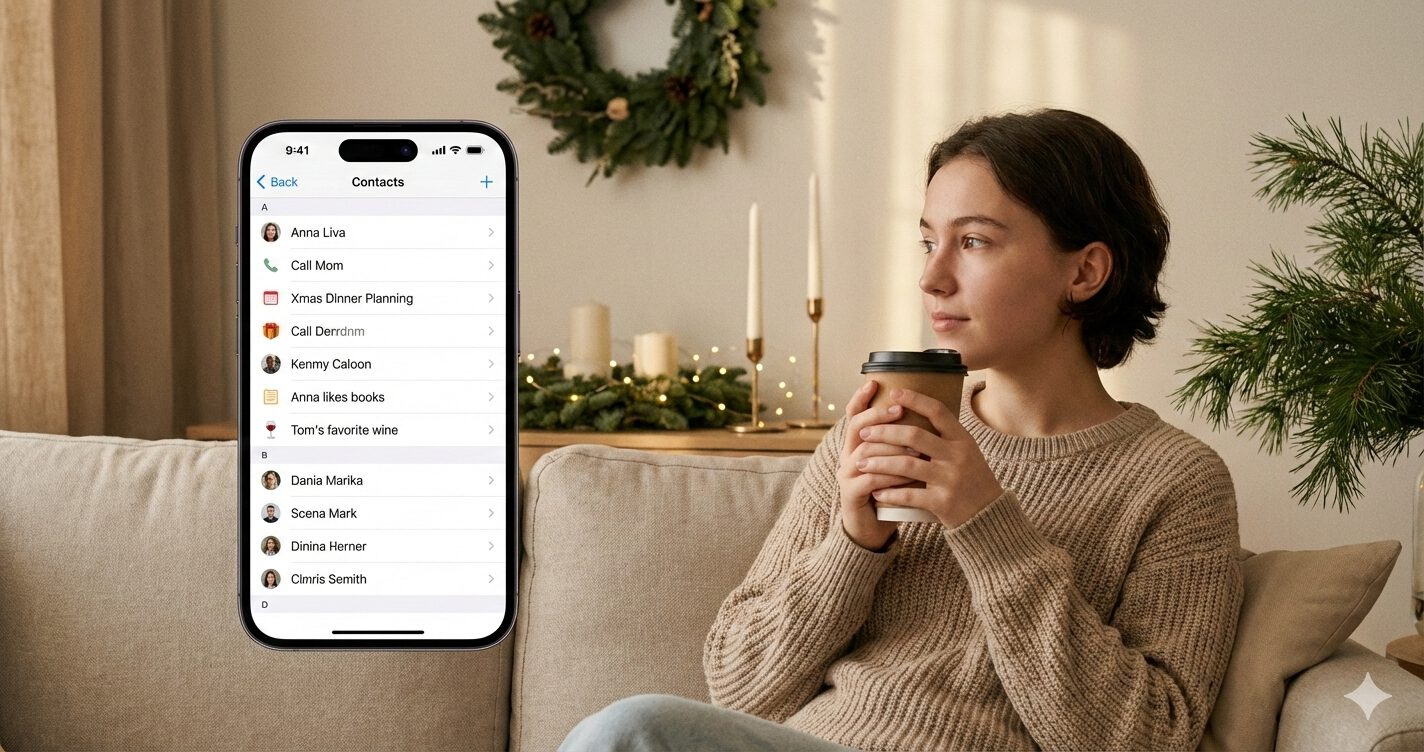
Over the holiday chaos? Build a low-stress relationship network
Holiday season in the US usually means three things: Mariah Carey, crowded Targets and group texts that suddenly come back from the dead. Somewhere in the middle you are trying to survive office deadlines, family expectations and that nagging feeling of “I should really check in with people”. No wonder so many dread December as much as they love it.
According to a 2024 survey, about 62 % of Americans say their stress levels go up during the holidays – mainly because of money, shopping and tricky family dynamics.[1] At the same time, more than half report increased loneliness or sadness around this time of year.[2] A weird mix: more pressure, less connection.
Holiday stress is often a relationship problem in disguise
From lived experience, it is rarely just the calendar. It is that low-key guilt of “I really owe this person a call” – multiplied by twenty. Old friends, former co-workers, that cousin you actually like but never see, your parents, your mentor from a previous job. It all piles up.
Research on social connection is blunt: Strong, stable relationships are one of the most powerful protective factors for mental and physical health. Loneliness, in contrast, has been linked to higher risks of depression, substance abuse and even heart disease and dementia, especially in older adults.[2]
The catch: Our brains are simply not designed to keep track of hundreds of people at the same emotional intensity. Dunbar’s work suggests a rough cap of about 150 people we can maintain as meaningful contacts at any given time.[3] Everyone else is more of a loose tie. Holiday stress skyrockets when we try to treat everyone like inner-circle family.
“Holiday burnout is often less about too many events and more about too little clarity on which relationships truly matter.”
A smarter contact network instead of December guilt
Imagine your contacts were not a chaotic graveyard of phone numbers but a living system that actually supports you. Less random guilt, more calm structure. That does not require a huge productivity setup – just a few smart decisions.
- Drop the FOMO: You are not supposed to keep every connection equally warm.
- Think continuity, not intensity: A few honest touchpoints over the year beat one long apology email at Christmas.
- Create a simple system: Something that reminds you when it is a good time to check in.
This is where tools like HighFive can quietly help. It works like a private, privacy-friendly CRM for your real life: You store notes about conversations, personal milestones like a move, a job change or a new baby, and you can attach photos to your contacts. The app runs locally on your iPhone, is designed with GDPR-level privacy in mind and can give you smart reminders for birthdays and anniversaries so you do not have to keep everything in your head.
Your 5-step plan to a calmer holiday network
If you feel overwhelmed, here is a small, realistic plan you can put into practice in one evening.
- Define your core circle: Pick about 20–30 people who are genuinely important to you right now.
- Label the relationship: For each person, add a short tag: “close friend”, “work ally”, “family but complicated”, “mentor”.
- Set a realistic rhythm: Not everyone needs monthly conversation. For some, twice a year is perfect.
- Decide one holiday action: Who gets a card, who gets a short voice note, who gets a quick FaceTime?
- Build your reminder system: Put birthdays and key dates into your calendar or into HighFive and jot down one or two notes you want to remember for next year.
In that same 2024 survey, 21 % of respondents said they were considering seeking mental health support around the holidays because stress was getting to them.[1] A strong, well-tended network will not replace therapy, but it can offer stability you feel every single week.
How your network supports your mental health
Think of your relationships as an emotional shock absorber. Studies consistently show that having people you can reach out to – even briefly – lowers perceived stress and improves well-being.[2] Interestingly, research on “weak ties” suggests that those looser, less frequent connections can also boost happiness, because they bring in fresh perspectives, ideas and opportunities.[4]
If you nurture those ties in small, regular ways throughout the year, December becomes less of an emotional deadline. You are not suddenly trying to catch up with everyone. You are just adding a few extra warm touches to an already humming network.
Conclusion: Use this Christmas to make next Christmas easier
Holiday stress does not magically disappear if you simply push harder. It eases when you prioritize clearly, plan your energy and build a network that supports you back. The science is clear: Connection protects, chronic loneliness wears you down.[2]
So start small. Decide on your core circle. Choose two or three concrete gestures for this holiday season. Then set up a simple system – maybe with an app like HighFive – so you will not be starting from scratch next year.
Pick one person today you have been meaning to contact. Send a short, honest, slightly imperfect message. Tomorrow, another. That is how a calmer, kinder holiday network quietly begins.
Sources
- [1] Sesame Care (2024): 2024 Election & Holiday Stress Survey Results. Link
- [2] Public News Service (2023): Loneliness, isolation on the rise around the holidays. Link
- [3] BBC Future (2022): Dunbar’s number – why we can only maintain 150 relationships. Link
- [4] Granovetter, M.: The Strength of Weak Ties. Overview e.g. here: Link